Ask a room of Quakers what hope means to them and you’ll get a variety of answers. Ask these same Friends to describe the shared Quaker hope and it might take a while. You won’t find a section on hope in Quaker faith & practice. The most recent collective statement on hope made by Quakers in Britain, to my knowledge, is from 2009 in the context of climate change: ‘our faith in common humanity gives hope; love, rather than fear, can still lead us through this crisis.’[1] What does it mean to have faith in common humanity? Isn’t common humanity why we’re in this mess? Hope is something that Quakers today aren’t well practiced at talking about, even as situations like the climate crisis compel us to articulate what hope means.

Tag: liberal Quakerism
Reflections on Britain Yearly Meeting 2024
Should I keep my membership of the Religious Society of Friends? This was the question I anticipated bringing with me to Britain Yearly Meeting (BYM) at Friends House in London on a sunny July weekend. I stopped attending a local Quaker Meeting 18 months ago, and I no longer give financially to my Area Meeting. What does this mean for my status as a member? If membership means being part of the ship’s crew instead of a passenger (Qf&p 10.34) what am I now? It turns out I didn’t have to wait until BYM for an answer.
The good news of sin
I want to talk about sin. Depending on what type of Quaker you are, this may seem a very un-Quakerly thing to do. The Quakers I know in Britain hardly talk about sin at all, and the first Quakers of 17th century England were very wary of anyone putting too much emphasis on sin, like the Puritans. Quakers accused Puritan ministers of “preaching up sin,” weighing people down rather than directing them to the liberating Light of Christ. I’m not a Puritan, but in this post I write about sin, and about how deeply it dwells in our flesh, so deep that escape in this life is very unlikely. I hope my Quaker forebears can forgive me.
Join me for my online course on Quaker Theology and Whiteness
“The Spirit of Freedom” has a publication date
November 26, 2024. My author-copies arrived in the post today, and it's thrilling to finally hold it in my hand.
Thank you to my readers in 2023
In the small corner of the world that is jollyquaker.com, it’s been a good year. When I look back at my writing in 2023, I see myself both exploring a queer Jesus-centred spirituality that embraces and goes beyond Quakerism, and growing in confidence as an academic theologian. Thank you for accompanying me on this journey by reading the blog. Here’s my summary of the year as a reader and writer.
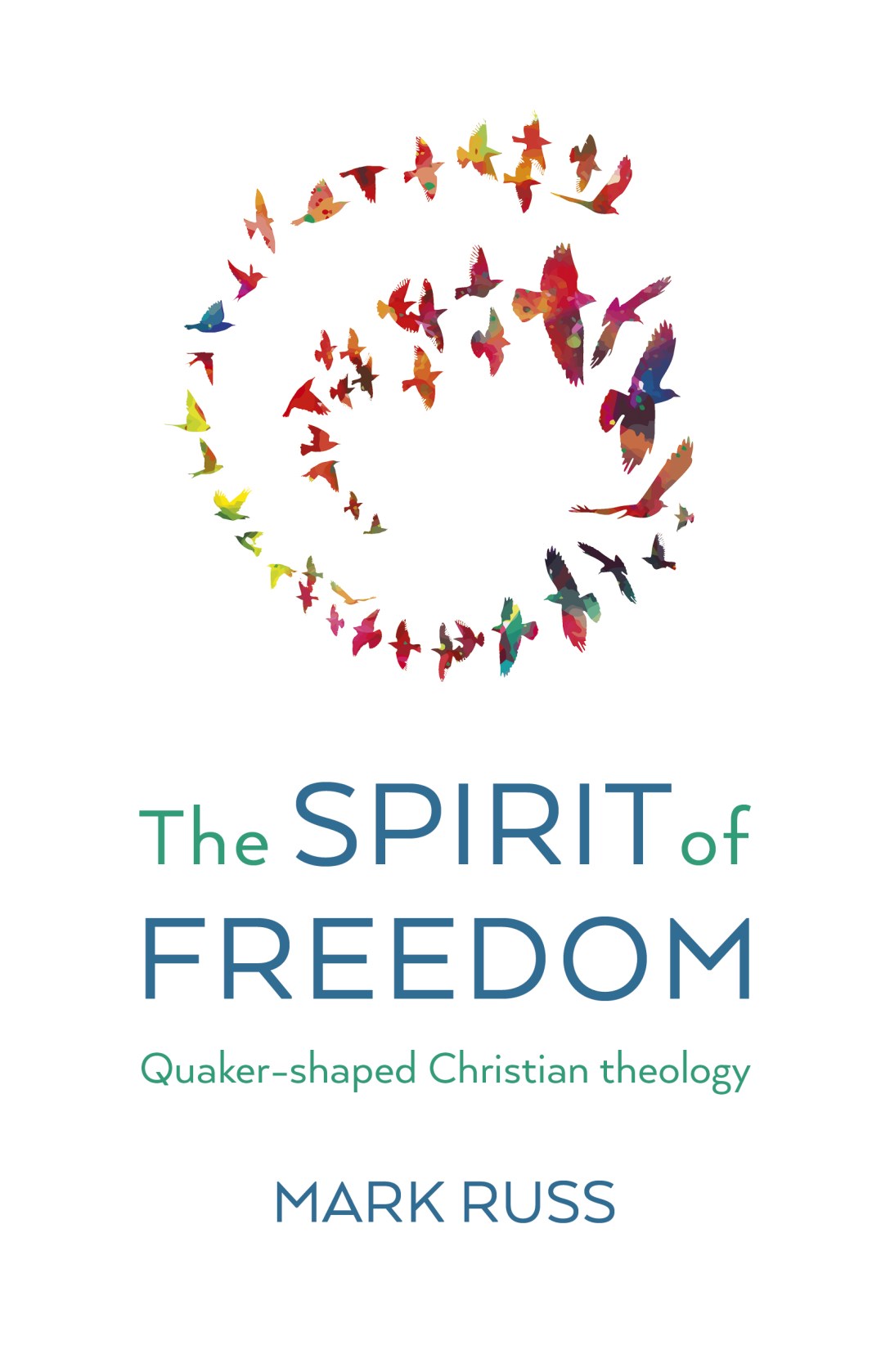
My new book “The Spirit of Freedom” cover reveal
My new book has a beautiful, beautiful cover. "The Spirit of Freedom: Quaker-shaped Christian theology" will be published in 2024 by Christian Alternative Books. It's a collection of my best writing from the last decade, and I'm really proud of it. I can't wait for you to read it. A publication date is yet to… Continue reading My new book “The Spirit of Freedom” cover reveal
Whiteness and the Quaker Universalist Discourse in Britain
Join me at the Quaker Theological Discussion Group 2023
I'm excited to be presenting a paper at the Quaker Theological Discussion Group on Saturday 2 December 2023 at 8–10am PST / 11am–1pm EST / 4–6pm GMT. This event is online and free to attend. Do join me! My paper is called "Whiteness and the roots of the Quaker Universalist discourse." Here's a short summary… Continue reading Join me at the Quaker Theological Discussion Group 2023
Tasting the Eternal Sabbath: The hopeful possibilities of Quaker Worship
Here’s the text of the paper I presented at the Society for the Study of Theology Postgraduate Conference, 4-6 September 2023, at the University of Edinburgh. In this paper, which is based on my Masters thesis, I begin with the understanding of hope found in narrative theology, a way of doing theology associated with Stanley Hauerwas among others. I use this to show how Quakers in Britain today struggle to articulate a common hope. I then suggest how Quaker worship can be seen as a source of transcendent hope through offering a taste of the Eternal sabbath, with some help from Reformed theologian Jürgen Moltmann.