Dear readers, I hope that wherever you are reading this, you are safe and well. Here’s a short reflection on my reading, writing and thinking in 2021, and a big ‘thank you’ for reading the results.
Author: Mark Russ
“Why do you call me good?”: Talking about whiteness and responsibility
At the 2021 Britain Yearly Meeting Gathering, I gave a talk and workshop on behalf of Woodbrooke called '“Why do you call me good?”: Talking about whiteness and responsibility'. This video is now freely available to watch on the Woodbrooke YouTube channel, and I thought readers of my blog might appreciate it too.
My new book has a cover
Book Review: ‘Hope’s Work’ by David Gee
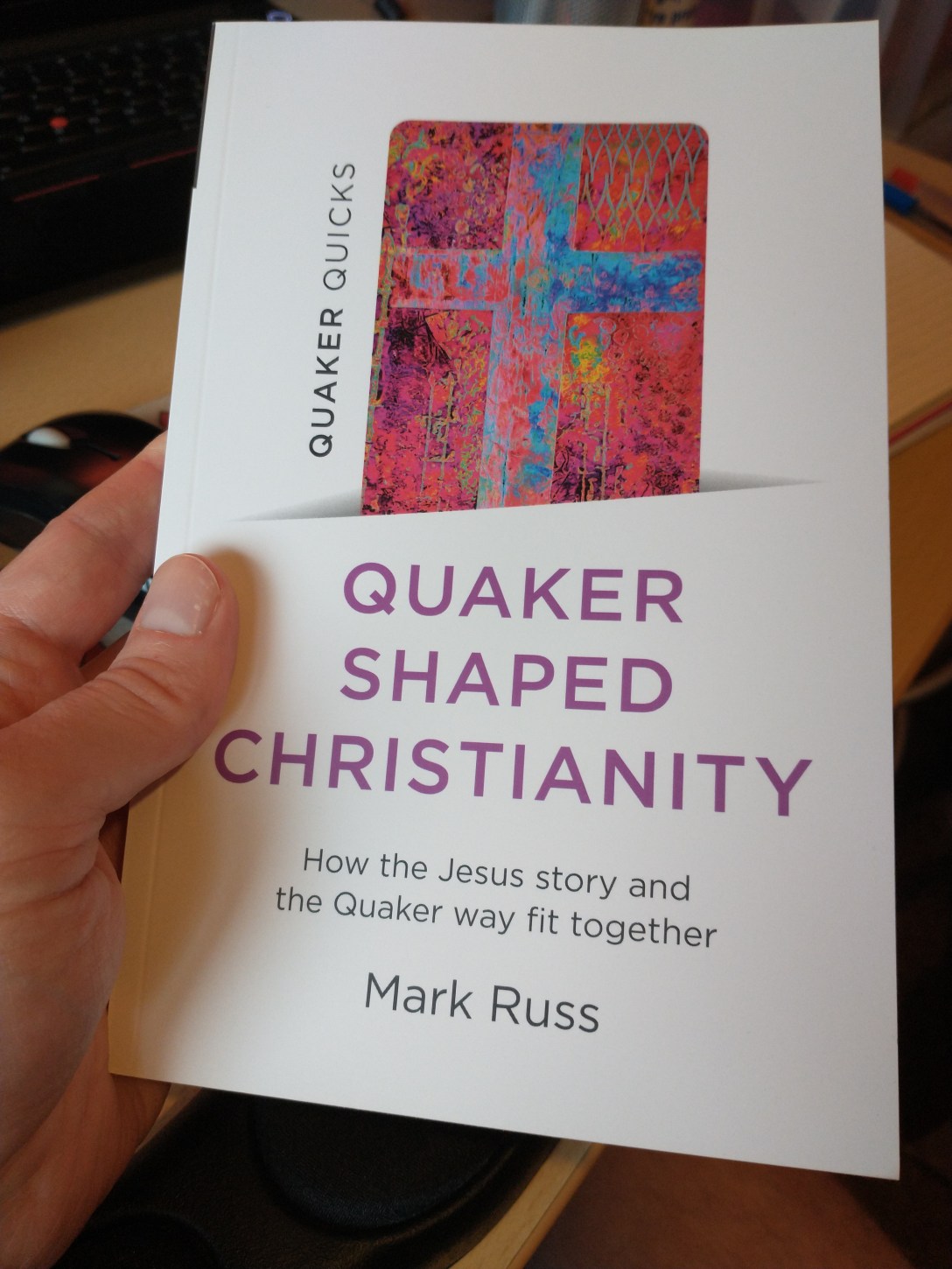
My first book – ‘Quaker shaped Christianity: How the Jesus story and the Quaker way fit together.’
Decentering ourselves: Reflections on Britain Yearly Meeting Gathering 2021
Whiteness and Quaker theological fragility
I'm pleased to announce that my article '"Why do you call me good?": Whiteness and Quaker theological fragility' has been published today in the Friends Quarterly (Issue 3, 2021). You can buy a copy of this edition here: https://thefriend.org/magazine/tfq.
Book Review: ‘The Christian Imagination: Theology and the Origins of Race’ by Willie James Jennings.
The community formed by and around Christ should be one of strangers brought into intimate communion, a new kind of family. But what has happened to this original vision of the Church?... The Church has moved from being a community of intimacy to a community of strangers, strangers who don’t even recognise one other as fellow Christians. In his book ‘The Christian Imagination: Theology and the Origins of Race’, Willie James Jennings describes the roots of this ‘distorted relational imagination’.
What does ‘Quaker Faith and Practice’ say about sin and evil?
In ‘Quaker Faith and Practice’ (Qf&p), the ‘book of discipline’ of Quakers in Britain, there is no chapter dedicated to sin or evil. Quakers are not known for their sin-talk. Early Quakers would accuse the Calvinists of ‘preaching up sin’. In Qf&p, there are Edgar B Castle’s words that ‘to contemplate evil is a poor way of becoming good’ (26.69). However, Qf&p does have quite a bit to say about sin and evil, and I’ve put this summary together as part of my work on Quakers and racism.
Institutional Racism and Quakers
If we are going to foster a Quaker culture that can name racism and discrimination, and move quickly to the defence of the victim, we have to rethink our understanding of sin. White Quakers like me have to acknowledge that, however good our intentions, we will ‘naturally’ perpetuate institutional racism. We will do this unconsciously, but we are still responsible for the damage we do. Our ability to act in a non-racist way has been perverted. Without our choosing, we are sinners.