Welcome, support, acknowledgment and affirmation of trans people cannot coexist with continuing ‘debate and dialogue’ on the legitimacy of trans identities. Many cis Quakers have much to discover about the lived reality of trans people, and so there should always be space for discussion fuelled by the genuine desire to learn. But there comes a point where ‘debate and dialogue’ must end, where speech that does not measure up to our collectively discerned standards of love and truth needs to be halted. Either Quakers welcome and support trans people, which includes at a minimum believing they are who they say they are, or Quakers don’t. Or Quakers are using the word ‘welcome’ in such a weak manner as to render it meaningless. To truly welcome trans people means allowing trans people to set the terms for that welcome. We cannot welcome trans people and at the same time keep space open for anti-trans rhetoric. Friends who continue to tolerate this 'debate' set themselves against the wellbeing of trans people and against the leadings of the Holy Spirit as discerned by the Yearly Meeting. Compromise cannot be made with the spirit of fear that drives the anti-trans moral panic.
Category: Diversity & Inclusion
Join me for my online course on Quaker Theology and Whiteness
Quakers and Universal Mystical Experience
A widely held belief amongst Quakers is that beneath the surface level differences of the world religions is a uniting spiritual bedrock. Quakerism, in its rejection of outward religious symbols and its use of stillness and silence, is seen as an essentially mystical religion that tries to get as close to this bedrock as possible. Quakerism is often seen as akin to other traditions labelled as mystical, such as Vedanta Hinduism, Sufism, Kabbalah and Buddhist mediation. Quakerism’s focus on this mystical essence makes the Quaker meeting a theologically inclusive space, holding different surface beliefs whilst mystically united. In this blog post I’m going to trace the history of this idea and suggest its built on problematic foundations.
Unity of communion in God’s ‘incorrigibly plural’ world
The Spirit of Christ continually surprises me with the 'incorrigibly plural’ nature of God's creation. Christ is ‘drunkenly various’, a vine that outgrows any trellis we might build for her. I know Christ in me, but Christ is infinitely, delightfully strange in others. The way of peace is more a spirit of curiosity and love in the midst of difference. Unity of communion doesn’t mean that our differences disappear, but they are no longer a dividing wall of hostility between us (Eph. 2:14). We remain our ‘fearfully and wonderfully made’ individual selves (Ps, 139:14), but we understand each other better.
Whiteness and Quaker theological fragility
I'm pleased to announce that my article '"Why do you call me good?": Whiteness and Quaker theological fragility' has been published today in the Friends Quarterly (Issue 3, 2021). You can buy a copy of this edition here: https://thefriend.org/magazine/tfq.
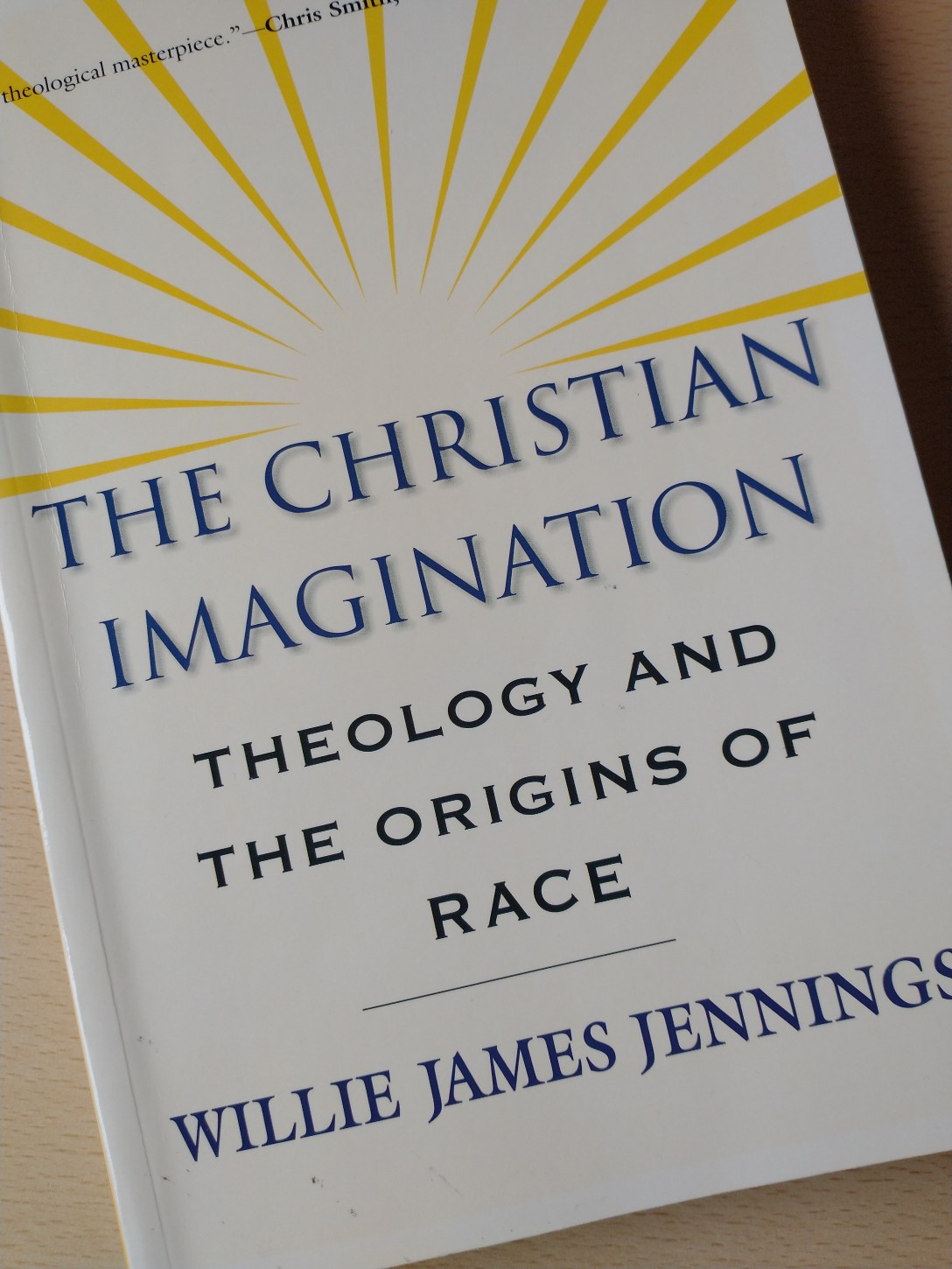
Book Review: ‘The Christian Imagination: Theology and the Origins of Race’ by Willie James Jennings.
The community formed by and around Christ should be one of strangers brought into intimate communion, a new kind of family. But what has happened to this original vision of the Church?... The Church has moved from being a community of intimacy to a community of strangers, strangers who don’t even recognise one other as fellow Christians. In his book ‘The Christian Imagination: Theology and the Origins of Race’, Willie James Jennings describes the roots of this ‘distorted relational imagination’.
Institutional Racism and Quakers
If we are going to foster a Quaker culture that can name racism and discrimination, and move quickly to the defence of the victim, we have to rethink our understanding of sin. White Quakers like me have to acknowledge that, however good our intentions, we will ‘naturally’ perpetuate institutional racism. We will do this unconsciously, but we are still responsible for the damage we do. Our ability to act in a non-racist way has been perverted. Without our choosing, we are sinners.
James Cone’s ‘A Black Theology of Liberation’ and white liberal Quakerism
Every now and again I encounter a book that gives me such a jolt it demands to be talked about. I've just finished James Cone's 'A Black Theology of Liberation', first published in 1970, and it has stirred me up. I found it both exciting and disturbing, and I need to process what I've read.… Continue reading James Cone’s ‘A Black Theology of Liberation’ and white liberal Quakerism
Setting aside white guilt
In my work around issues of race and whiteness with Quakers, it’s not uncommon to hear white people express an overwhelming feeling of guilt. Learning about whiteness – discovering your nation’s history of colonialism, realising how you’ve benefitted from the privileges of whiteness , remembering the times you didn’t challenge a racist comment, facing your… Continue reading Setting aside white guilt
Thank God for my trans Friends
Within the British Quaker community, a painful conversation/debate/conflict (depending on your viewpoint) centred on the inclusion of trans and non-binary people is increasingly rising to the surface. As I see it, a big part of the disagreement is where we start from. I have recently heard some Quakers speak from a starting point of the… Continue reading Thank God for my trans Friends